
Upgrading to a new iPhone can feel like unwrapping a shiny present, but the excitement can quickly turn to impatience when it comes to transferring all your precious data. How long does it really take to move everything from one device to another? Spoiler alert: it’s not as painful as waiting for your coffee to brew, but it does require some patience.
Overview of iPhone Transfer Options
Several options exist for transferring data from one iPhone to another. Users can choose from methods such as Quick Start, iCloud, or iTunes. Each method offers unique advantages and different time frames for completion.
Quick Start allows users to set up new iPhones easily using their old devices. This feature requires both iPhones to run iOS 11 or later. The transfer can take anywhere from a few minutes to over an hour, depending on the amount of data.
iCloud provides a wireless option for users who prefer not to use physical cables. Users must back up their old iPhone to iCloud, then restore the backup on the new device. The process generally takes around 30 minutes to several hours. The time varies based on the speed of the internet connection and the size of the data being transferred.
iTunes offers another method. Users connect their old iPhone to a computer and back up their data via iTunes. Afterward, they connect the new iPhone and restore the backup. This transfer method typically averages 20 to 40 minutes. However, if the backup is large, it may take longer to complete.
Each method has its own requirements and potential waiting times. Choosing the right option often depends on the user’s preferences for convenience, speed, and available resources. Understanding these choices allows users to make an informed decision, ensuring a smoother transition to their new iPhone.
Factors Affecting Transfer Time
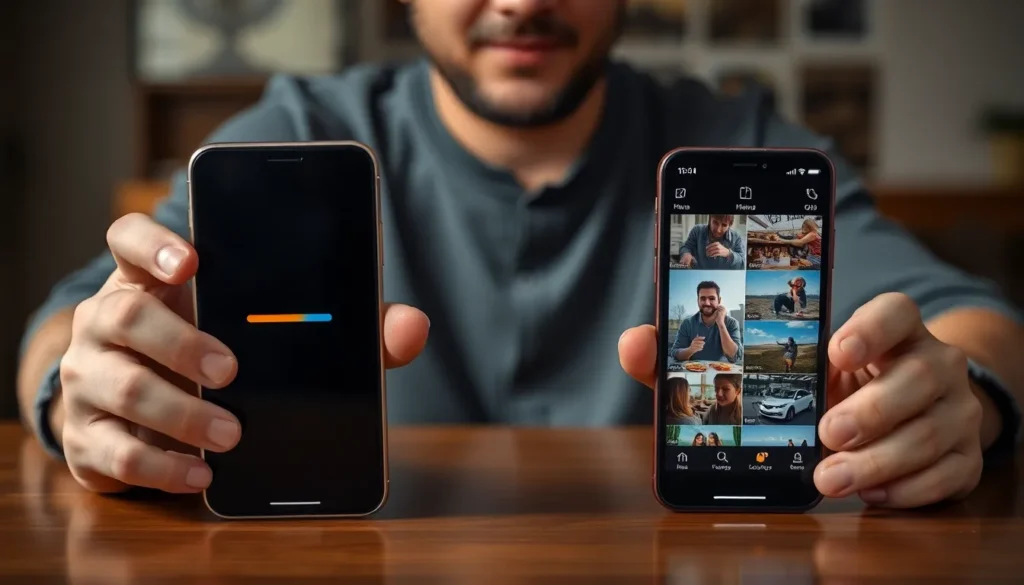
Transfer time for data between iPhones varies based on several important factors. Understanding these elements can help set realistic expectations for users.
Data Size
Data size plays a crucial role in determining transfer duration. Transferring a small amount of data, such as contacts and settings, may take only a few minutes. Larger data sets, including photos, videos, and apps, can significantly increase this time. For instance, backing up 10 GB of data typically takes longer than 30 minutes. Users with extensive media collections should anticipate additional hours for completion. Each gigabyte added adds processing time, resulting in longer waits during the transfer process.
Transfer Method
The method chosen for transfer also impacts the speed and efficiency of the process. Quick Start generally offers the fastest experience, as it actively uses both devices. Transfers using iCloud depend on internet speed and can fluctuate from 30 minutes to several hours. iTunes transfers are usually more predictable, averaging 20 to 40 minutes, but require a connection to a computer. Users need to consider their preferences for connectivity and convenience while selecting the best method. Each transfer approach has its unique considerations that directly affect transfer time.
Step-by-Step Transfer Process
Transferring data to a new iPhone can seem daunting. By breaking the process down into manageable steps, users can efficiently move their data.
Using Quick Start
Quick Start simplifies the setup experience. First, place both devices close together and turn on Bluetooth. The old iPhone will display a prompt to set up the new one. Follow the on-screen instructions, which include scanning the animation on the new device with the old one. Data transfer typically takes a few minutes but may extend to over an hour based on content size. Apps, photos, and settings transfer seamlessly, allowing for a smooth transition.
Using iCloud
iCloud provides a wireless solution for transferring data. Start by backing up the old iPhone to iCloud, ensuring a strong Wi-Fi connection. Initiate the backup in Settings under your Apple ID, then tap iCloud Backup. Once completed, turn on the new iPhone and choose to restore from iCloud during the setup process. This method usually takes 30 minutes to several hours, influenced by internet speed and data volume. Users benefit from the convenience of not needing a computer while also securing their data in the cloud.
Using iTunes/Finder
iTunes or Finder offers a reliable transfer option. Connect the old iPhone to a computer using a USB cable. After opening iTunes or Finder, select the device and choose to back it up. Ensure the backup is complete before disconnecting the old device. Once connected, the new iPhone will prompt users to restore from the iTunes or Finder backup. This process generally takes 20 to 40 minutes, depending on the backup size and content. Users appreciate the predictability of this method, especially for larger backups requiring more time.
Average Transfer Duration
Transferring data from one iPhone to another can vary in time based on the transfer method and data size. Each option offers a different experience, affecting how long the transfer takes.
Quick Start Transfer Times
Quick Start provides a swift method for data transfer. Typically, transfers last anywhere from a few minutes to over an hour. A larger data set, such as photos and apps, may extend the duration, while basic contact transfer completes rapidly. Proximity of devices also plays a significant role; they should be close together during the process to maintain a fast connection.
iCloud Transfer Times
iCloud transfers operate wirelessly, making them convenient yet variable in duration. Expect the transfer time to range from 30 minutes to several hours. Factors like internet speed directly affect this process; a slower connection can significantly increase the time until data is fully restored. Users with larger backups will see longer durations due to greater amounts of data being uploaded and downloaded.
iTunes/Finder Transfer Times
Using iTunes or Finder involves connecting the old iPhone to a computer. This method generally takes between 20 and 40 minutes for most backups. Larger backups may require additional time, stretching the process beyond 40 minutes. Consistency is documented here; users appreciate the reliability of this method as it generally provides a predictable timeframe for data transition.
Tips to Speed Up the Transfer
Using the right method for transferring data can significantly reduce time. Quick Start stands out as the fastest option, so ensure both iPhones are placed close together during transfer. Reducing the number of apps and data types being transferred also helps. For instance, if social media apps are not essential, skipping them can speed up the process.
Ensuring a strong Wi-Fi connection boosts iCloud transfer speeds. Users should connect to a reliable network before initiating the backup. Lowering data size can make transfers smoother; for example, compressing large photo files or decreasing video quality may be beneficial.
Updating both devices to the latest iOS version clears potential software issues. Executing this step prior to transfer minimizes delays caused by incompatible software. Clearing unnecessary storage on the old iPhone streamlines the transfer as well. Freeing up space makes it easier for quick backups.
Using iTunes or Finder consistently leads to predictable transfer times. Organizing files on the computer beforehand ensures quick access during the process. Connecting the old device directly to the computer avoids the potential risks of network issues.
Taking these steps can lead to a faster and more efficient transition. Thorough planning and optimizing the transfer environment result in a smoother experience when upgrading to a new iPhone.
Upgrading to a new iPhone can be an exciting experience filled with anticipation. While the data transfer process may take some time, understanding the various methods and factors involved can make it more manageable.
Choosing the right transfer method is crucial for a smoother experience. Quick Start offers speed and convenience while iCloud provides a wireless option that depends on internet speed. iTunes remains a reliable choice for those who prefer a predictable timeframe.
By following the tips outlined in the article, users can streamline their transfer and enjoy their new device sooner. With a little patience and the right approach, the transition to a new iPhone becomes a seamless part of the upgrade journey.

